Quiet Cat Water Fountains: What Actually Affects Noise
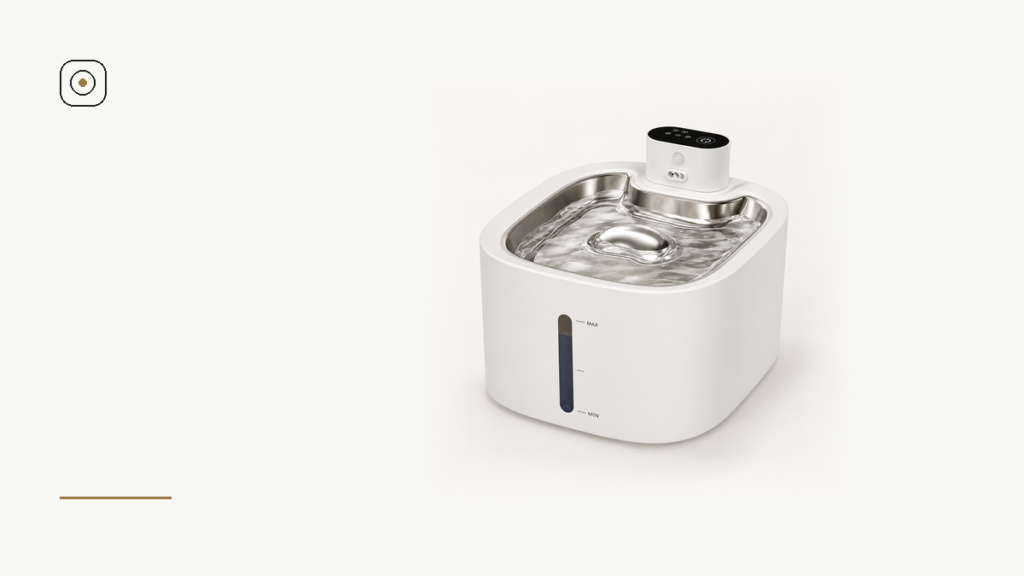
Fountain noise is the single most common regret people report after buying one — and it is almost always fixable. Here is what actually causes it, what to do about it, and what to look for if you have not bought yet.
What a quiet fountain sounds like
A healthy fountain produces a soft trickle and essentially no mechanical sound. If you can hear the pump — a hum, buzz, rattle or grinding — something is wrong, and it is usually one of five things below rather than a faulty unit.
The five causes, in order of likelihood
1. The water level is too low
By far the most common cause. A pump running with insufficient water draws in air and gets noticeably louder. If your fountain has suddenly become loud, check the level before anything else — this fixes it most of the time, and running dry will also shorten the pump’s life.
2. Air trapped in the pump
Common after cleaning or refilling. Lift the pump slightly while it is submerged and tilt it to release trapped bubbles, then reseat it. The change is usually immediate.
3. The pump needs cleaning
Hair, litter dust and biofilm collect around the impeller and make it work harder and louder. This is the most-skipped maintenance job. Dismantle the pump as far as the manual allows, clear the impeller and its housing, and rinse thoroughly. A monthly habit prevents most noise complaints.
4. Vibration against a hard surface
A fountain sitting directly on tiles or floorboards transmits pump vibration into the floor, which acts like a soundboard. A thin silicone mat underneath — the sort sold for pet bowls — removes it entirely and catches splashes at the same time.
5. The drop height
Falling water makes noise in proportion to how far it falls. Fountains with a tall, exposed stream are louder by design than those where water flows over a short lip into the reservoir. Running the water level higher shortens the drop and quietens it.
Placement matters more than people expect
The same fountain sounds different in different rooms. Hard, empty spaces reflect sound; soft furnishings absorb it. A fountain in a tiled bathroom will always sound louder than the identical unit on a rug in a living room. If noise bothers you at night, the practical fix is usually moving it — which is much easier with a cordless fountain, since you are not tied to a power point. We have a separate guide on keeping a fountain quiet at night.
What to look for before you buy
- A submerged pump — pumps that sit under the water are quieter than those that do not
- A short drop — water flowing over a lip rather than falling from height
- A generous reservoir — more water means the level drops below the danger zone less often
- Accessible pump design — if you cannot easily dismantle it to clean, it will get louder over time and stay that way
- Replaceable pumps — pumps are the wear part in any fountain; being able to replace one cheaply beats replacing the whole unit
Be sceptical of decibel figures in marketing. They are measured in ideal conditions with clean pumps and full reservoirs, which is not the state your fountain will be in three months from now.
If it is still loud
Work through it in order: top up the water, release trapped air, clean the pump thoroughly, add a mat, move it somewhere softer. If a fountain is still noisy after all five, the pump is likely worn — most manufacturers sell replacements, and it is a far cheaper fix than a new fountain.
More troubleshooting in our guides, including what to do when a fountain stops pumping and how to clean the pump properly.